Rewind provides developers with deep insight into HTTP traffic through real-time capture and analysis, making debugging network issues faster and more intuitive.
Overview
Rewind is a modern network debugging tool that bridges the gap between low-level packet capture and high-level developer experience. Unlike traditional tools like Wireshark, Rewind focuses specifically on HTTP traffic and presents it in a developer-friendly web interface.
Key Features
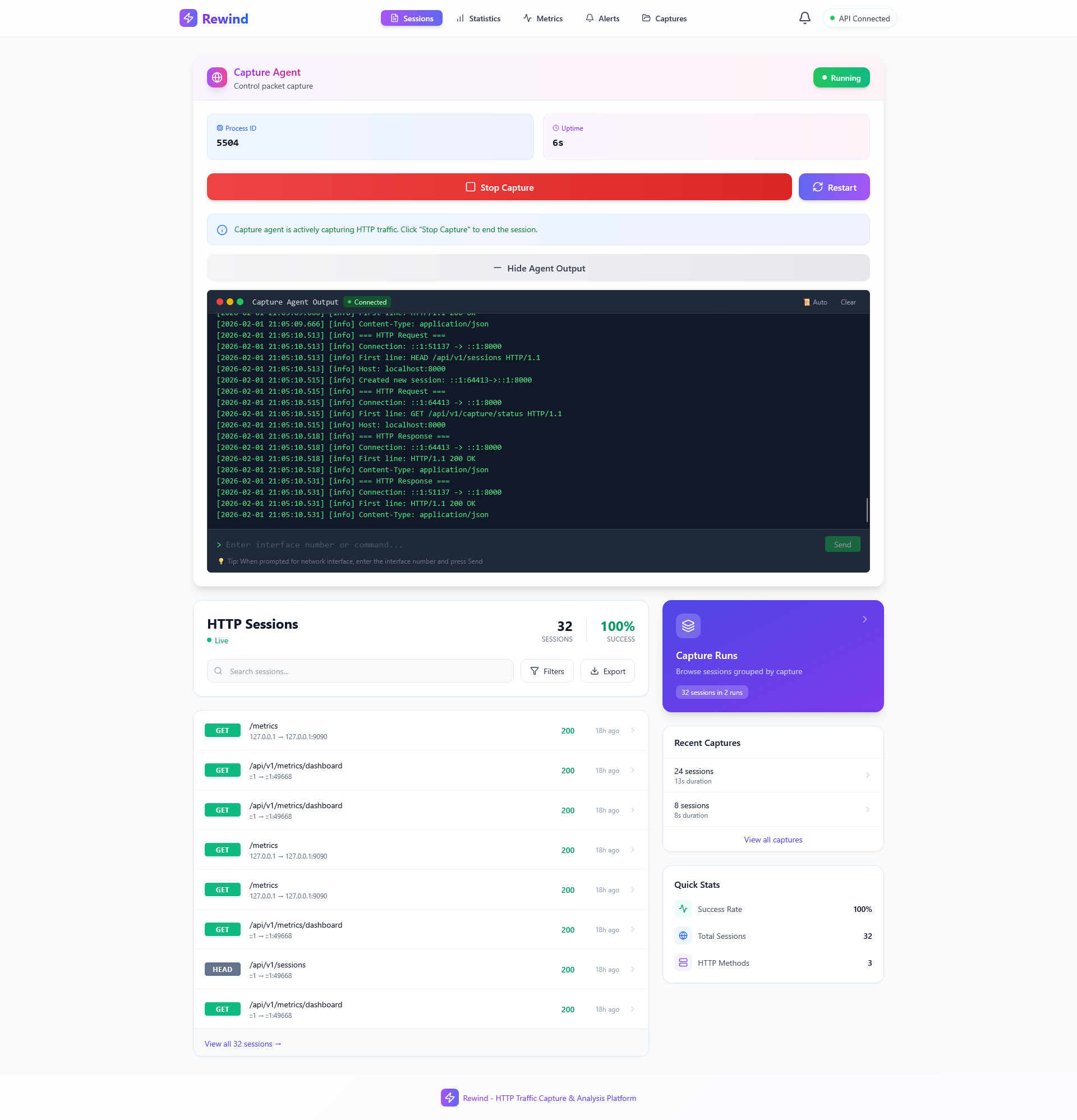
In-Browser Terminal
- Direct Agent Control - Interact with the C++ capture agent from the web UI
- Real-Time Output - See captured packets as they arrive
- Command History - Navigate through previous commands
Traffic Analysis
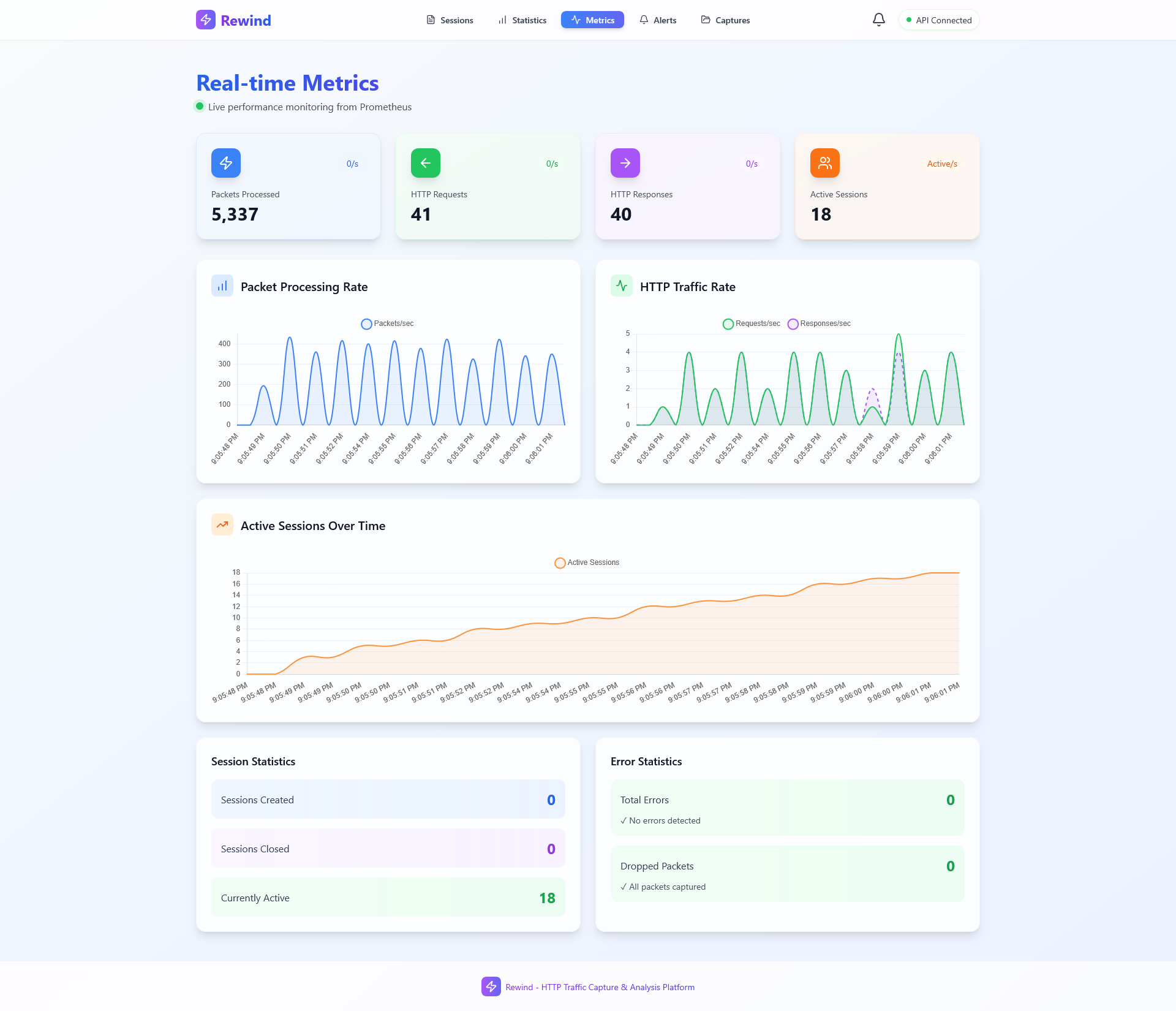
- Real-Time Metrics - Traffic monitoring with 2-second polling intervals
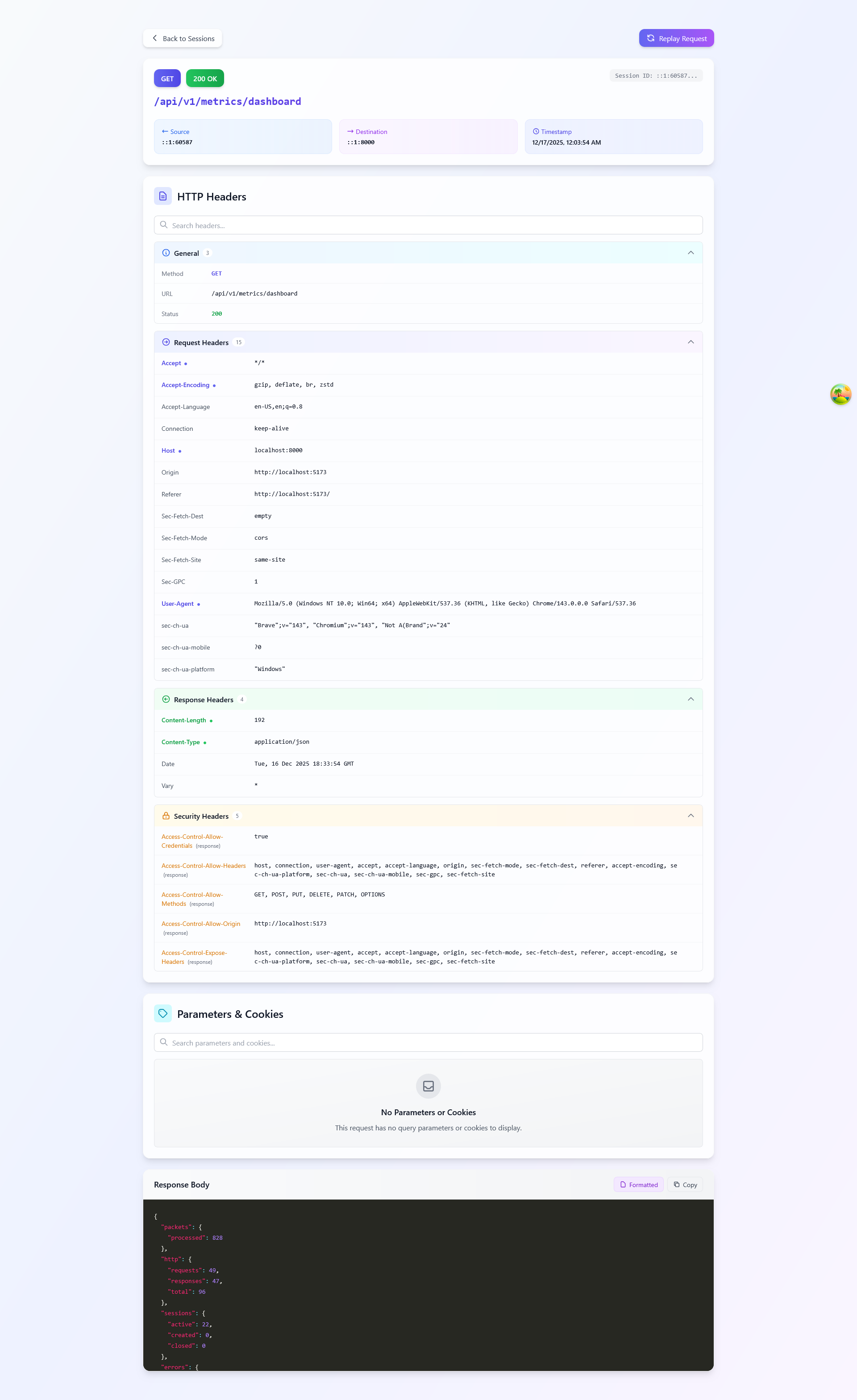
- Request/Response Pairing - Automatically correlate requests with their responses
- Timing Breakdown - See DNS, TCP, TLS, and server timing
Privacy & Security
- PII Sanitization - Automatically anonymize sensitive data during capture
- Configurable Redaction - Define patterns for data you want hidden
- Local Processing - All data stays on your machine
Developer Tools
- Request Replay - One-click functionality for debugging APIs
- Syntax Highlighting - HTTP headers viewer with proper formatting
- Smart Parsing - Automatic extraction of query parameters, cookies, and form data
- Export Options - Export sessions as HAR, cURL, or JSON
Alerting System
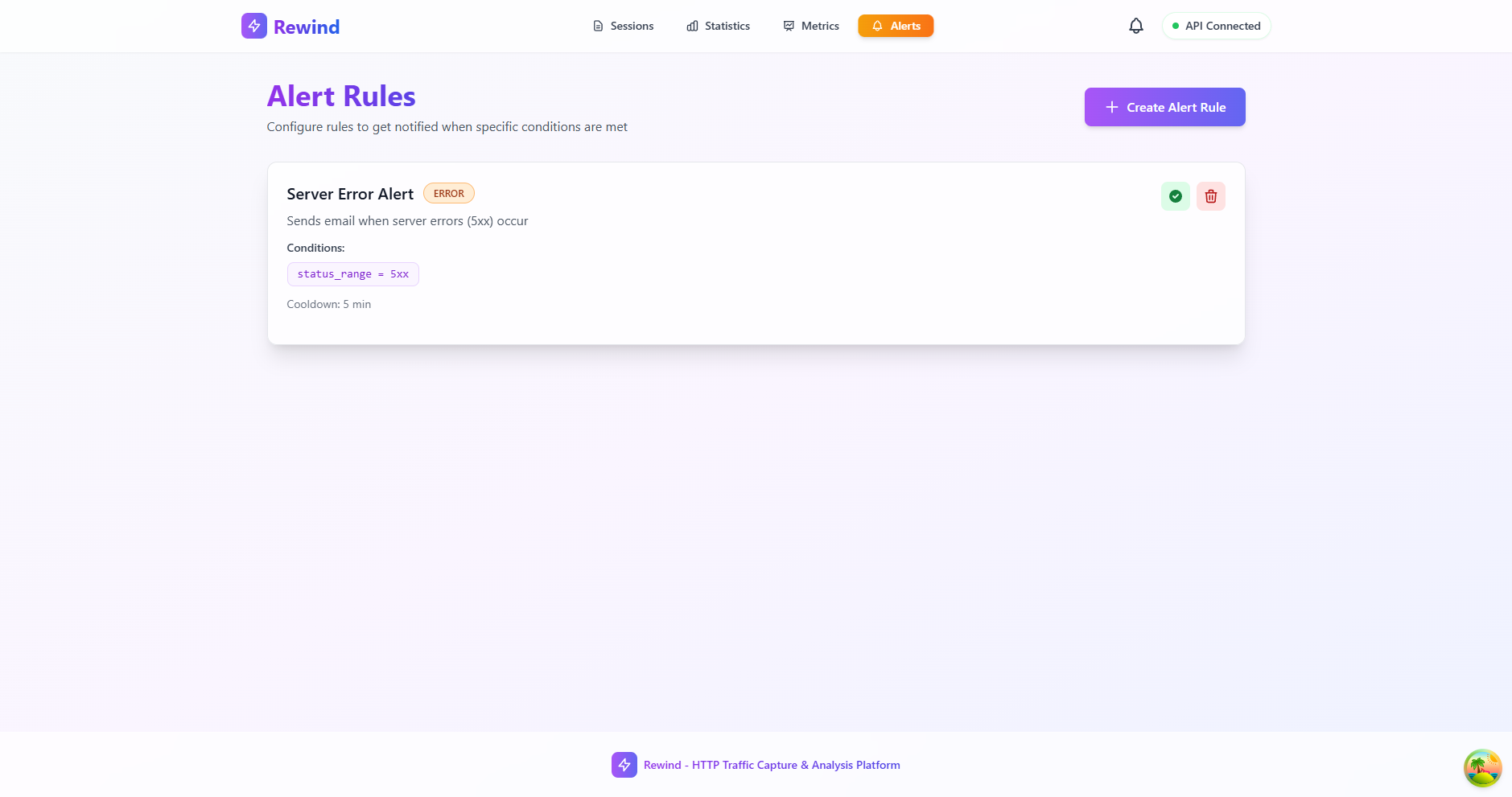
- Custom Rules - Define alerts based on status codes, response times, and URL patterns
- Email Notifications - SMTP-based alerts with HTML templates
- Webhook Support - Integrate with Slack, Discord, or custom endpoints
Session Management
- MongoDB Storage - Persistent session storage for later analysis
- Filtering & Search - Find specific requests across sessions
- Tagging - Organize sessions with custom tags
Architecture
Rewind follows a three-tier architecture designed for performance and extensibility:
flowchart LR
  subgraph CaptureLayer["Capture Layer"]
      A[C++ Agent
PcapPlusPlus]
      B[Network Interface]
  end

  subgraph BackendLayer["Backend Layer"]
      C[Bun/Elysia Server]
      D[WebSocket Handler]
      E[REST API]
      F[Process Manager]
  end

  subgraph FrontendLayer["Frontend Layer"]
      G[SvelteKit App]
      H[Traffic Dashboard]
      I[Alert Manager]
      J[Session Viewer]
  end

  subgraph Storage
      K[(MongoDB)]
      L[Prometheus]
  end

  B -->|packets| A
  A -->|Unix Socket| F
  F -->|spawn/monitor| A
  C --> D
  C --> E
  C --> F
  D -->|real-time| G
  E -->|REST| G
  G --> H
  G --> I
  G --> J
  C --> K
  C --> L
C++ Capture Agent
- Built with PcapPlusPlus for high-performance packet capture
- Runs with elevated privileges for network interface access
- Communicates with backend via Unix sockets
Bun/Elysia Backend
- WebSocket Streams - Real-time data push to frontend
- Process Management - Spawns and monitors capture agent
- REST API - Session CRUD operations and configuration
SvelteKit Frontend
- Reactive UI - Updates instantly as packets arrive
- TailwindCSS - Clean, responsive design
- Client-Side Storage - Quick access to recent sessions
Use Cases
- API Debugging - See exactly what your app sends and receives
- Performance Analysis - Identify slow endpoints and bottlenecks
- Security Auditing - Monitor for sensitive data leakage
- Integration Testing - Verify third-party API interactions
- Learning Tool - Understand HTTP protocol in depth
Requirements
- Administrator/sudo access for network interface access
- Bun 1.0+ or Node.js 18+
- MongoDB instance for persistent storage
- Optional: SMTP server for email alerts
Getting Started
# Clone the repository
git clone https://github.com/sreekarnv/rewind.git
cd rewind

# Install dependencies
bun install

# Build the C++ agent
cd agent && cmake . && make

# Start the application
bun run dev
What I Learned
Building Rewind pushed me to work across the entire stack:
- C++ for performance - When milliseconds matter, managed languages add overhead
- WebSocket architecture - Real-time data requires different thinking than REST
- Cross-platform challenges - Network APIs differ significantly between OSes
- User experience - Making complex data accessible requires careful design